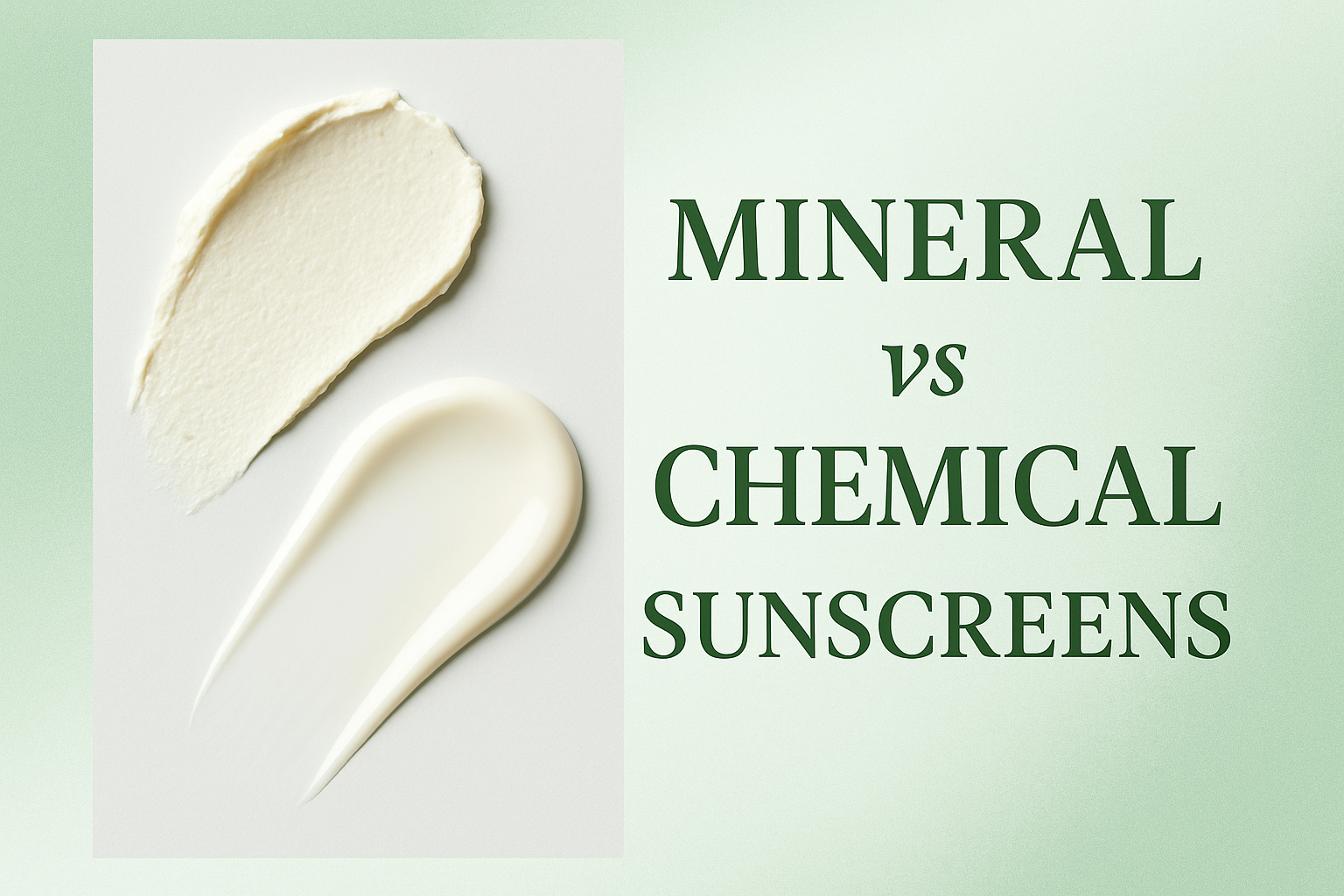
Mineral vs. Chemical Sunscreen
How to choose a Japanese or Korean sunscreen for sensitive, acne-prone, or easily irritated skin.
The best sunscreen is not automatically mineral or chemical. It is the one that gives you reliable protection without making your skin miserable.
Mineral sunscreen uses zinc oxide, titanium dioxide, or both. Chemical sunscreen uses organic UV filters, while hybrid formulas combine the two. Mineral formulas can be a good starting point for very reactive skin, but chemical and hybrid sunscreens often feel lighter and may be easier to wear every day.
What is the real difference?
Mineral and chemical filters both protect the skin mainly by absorbing ultraviolet radiation and converting it into a small amount of heat. Mineral filters also scatter and reflect part of that radiation.
This is more accurate than the common explanation that mineral sunscreen only “reflects” UV while chemical sunscreen “absorbs” it.
Key differences at a glance
Mineral sunscreens use zinc oxide, titanium dioxide, or both as their UV filters. They are often a useful starting point for people with very sensitive or easily irritated skin. Depending on the formula, they may feel slightly thicker and can leave a visible white cast, especially on deeper skin tones.
Chemical sunscreens use organic UV filters such as Uvinul A Plus, Uvinul T150, Tinosorb S, avobenzone, or octinoxate. They usually feel lighter, spread more easily, and leave little to no visible residue, which can make them easier to wear every day or under makeup.
Hybrid sunscreens combine mineral and chemical UV filters in the same formula. They are designed to balance strong UV protection with a more wearable texture and may reduce some common drawbacks of fully mineral formulas, such as a noticeable white cast.
For sensitive or acne-prone skin, the filter category alone does not tell the whole story. Fragrance, alcohol, richer emollients, and the overall texture may have a bigger effect on irritation, comfort, or breakouts.
Instead of choosing only by the words mineral, chemical, or hybrid, look at the complete formula, the finish, and how your own skin responds with regular use.
Which type should you choose?
Choose mineral when…
Your skin stings easily, you react to many UV filters, or you prefer zinc oxide and titanium dioxide.
Choose chemical when…
You want a lighter, clearer finish that layers easily under makeup and feels comfortable in humid weather.
Choose hybrid when…
You want some mineral filters but prefer a more wearable finish than many fully mineral formulas provide.
For acne-prone skin…
Focus on the complete formula, not only the filter type. Heavy texture, fragrance, alcohol, or another ingredient may be the real trigger.
What about sunscreen during pregnancy?
Zinc oxide and titanium dioxide have the strongest established safety data among sunscreen filters in the United States. Some people therefore prefer mineral sunscreen during pregnancy.
That does not mean every chemical sunscreen has been proven unsafe. Pregnancy advice should be individualized, especially if you have allergies, a skin condition, or concerns about a specific ingredient.
Best mineral and mineral-forward options
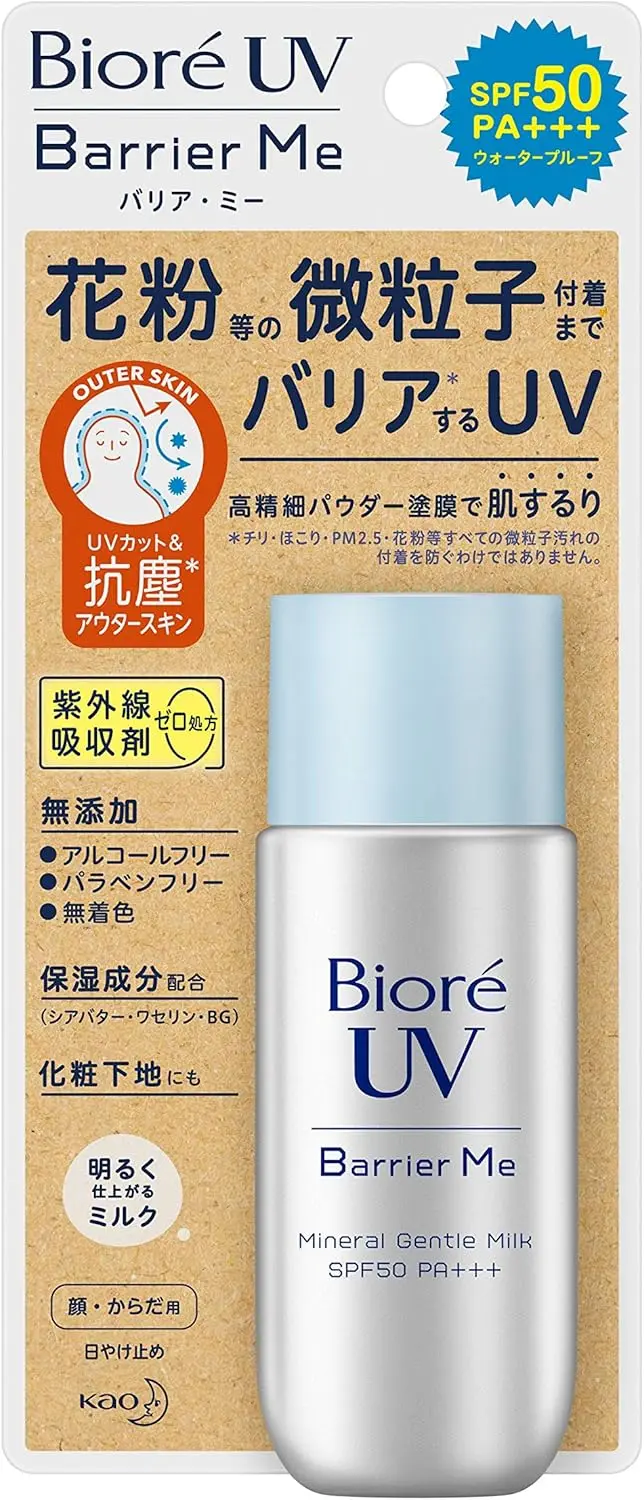
Bioré UV Barrier Me Mineral Gentle Milk SPF50+
Best for: Sensitive skin that prefers a milk texture
A mineral-focused Japanese sunscreen designed for everyday use and a relatively lightweight feel.
Keep in mind: Mineral milk formulas may leave some visible cast depending on skin tone and application amount.
Check price on Amazon Japan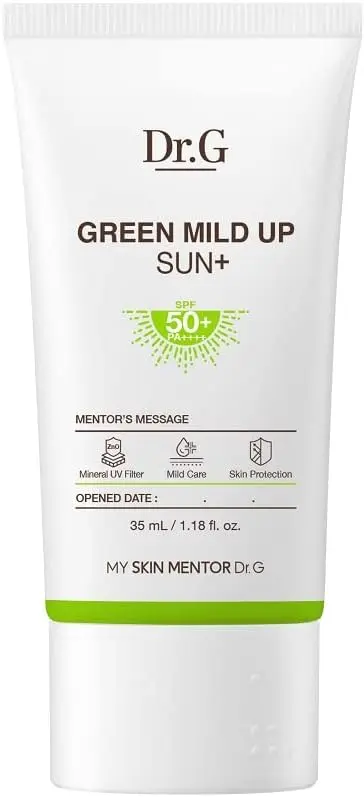
Dr.G Green Mild Up Sun SPF50+
Best for: Sensitive or breakout-prone skin
A well-known Korean mineral sunscreen with a more matte, protective finish.
Keep in mind: It may look pale or feel dry on some skin tones and dry skin types.
Check price on Amazon JapanBest chemical and hybrid options
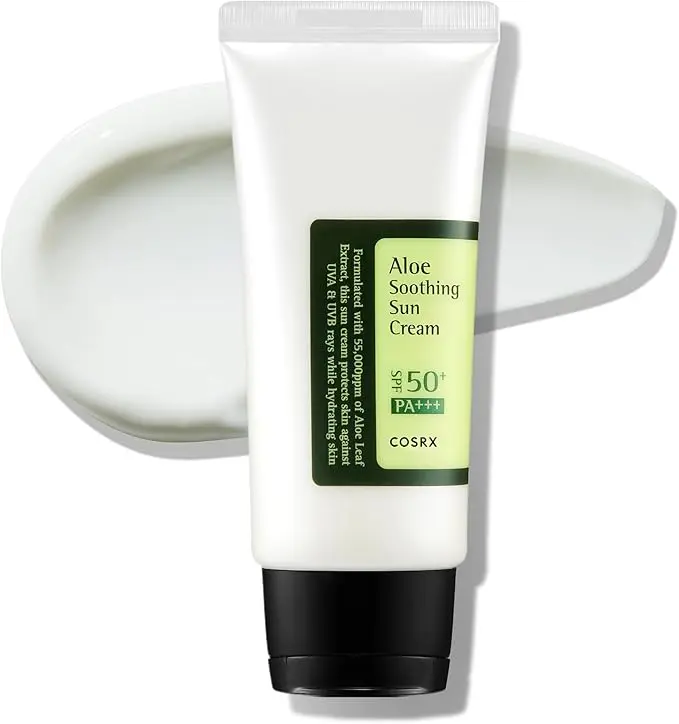
COSRX Aloe Soothing Sun Cream SPF50+
Best for: Normal to dry skin that prefers a cream
A moisturizing sunscreen with an aloe-based skincare feel and a comfortable daily finish.
Keep in mind: Richer cream textures may feel heavy on very oily or congestion-prone skin.
Check price on Amazon Japan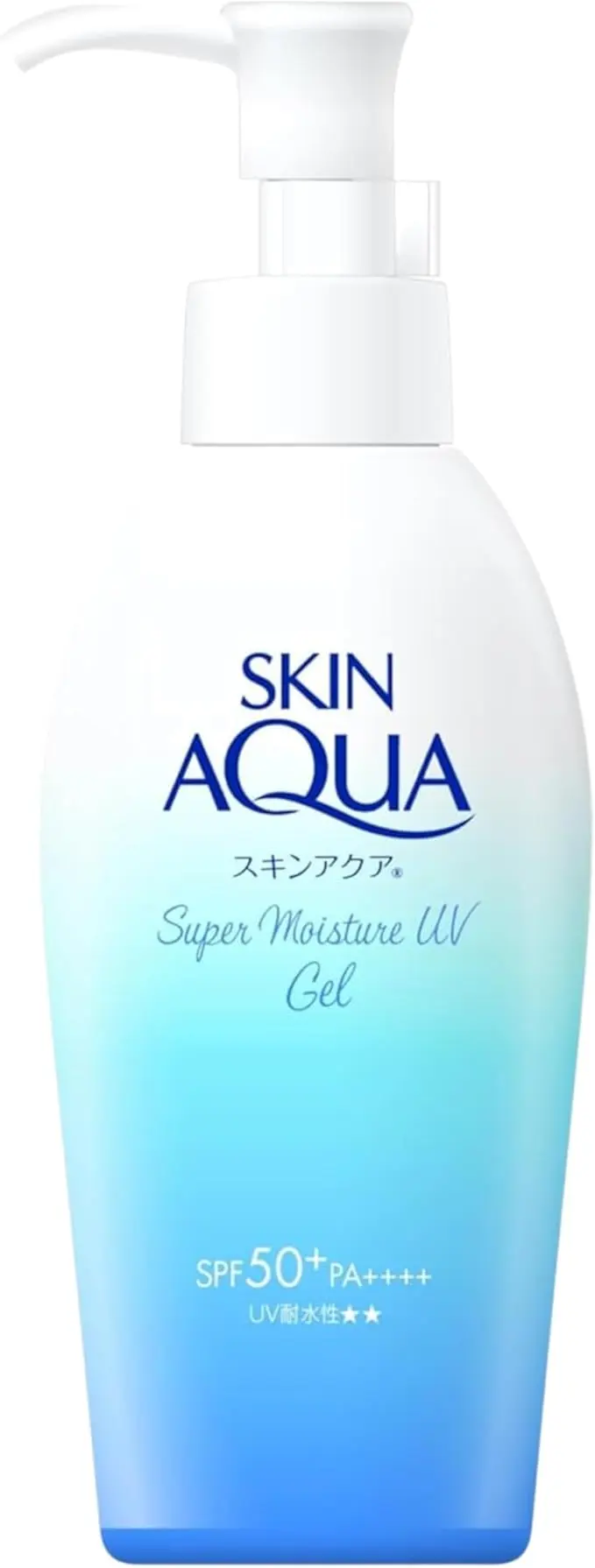
Skin Aqua UV Moisture Gel SPF50+
Best for: Lightweight daily protection in humid weather
A fluid Japanese gel that spreads quickly and feels less heavy than many cream sunscreens.
Keep in mind: Check the current ingredient list if your skin reacts to alcohol or fragrance.
Check price on Amazon Japan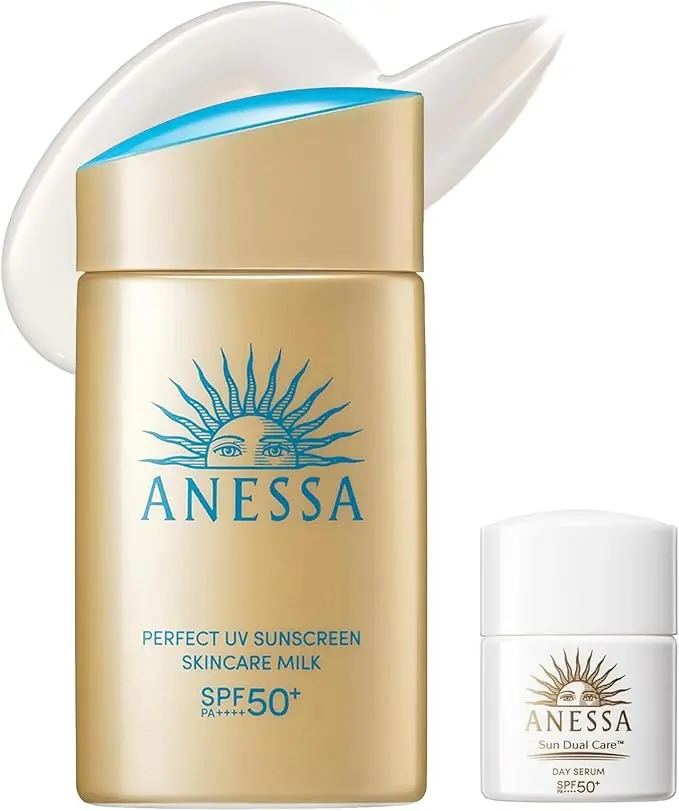
Anessa Perfect UV Sunscreen Mild Milk SPF50+
Best for: Sensitive skin that needs water-resistant protection
A mild milk designed for stronger outdoor use while aiming for a gentler feel.
Keep in mind: Anessa formulas can vary by market and reformulation. Confirm the current package if filter type matters to you.
Check price on Amazon Japan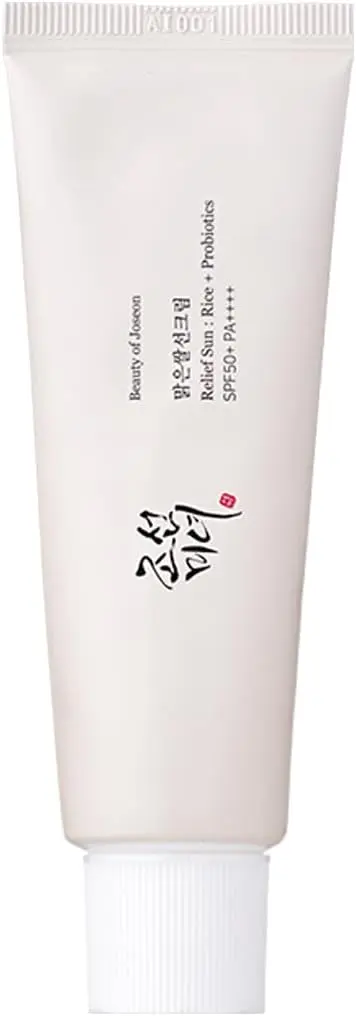
Beauty of Joseon Relief Sun SPF50+
Best for: Normal to dry skin that wants a moisturizing finish
A creamy Korean sunscreen that feels closer to a light moisturizer than a traditional sunblock.
Keep in mind: The finish may look too dewy on very oily skin.
Check price on Amazon Japan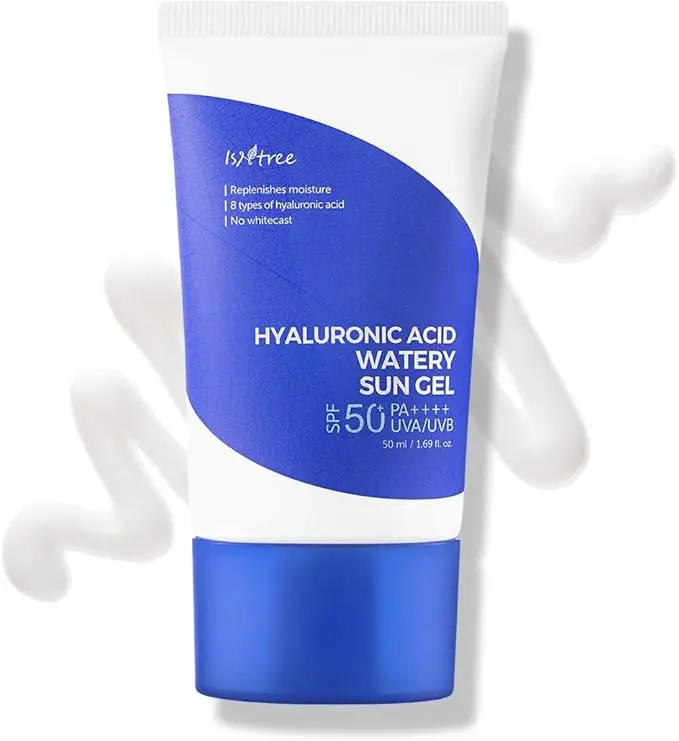
Isntree Hyaluronic Acid Watery Sun Gel SPF50+
Best for: Dehydrated skin that prefers a light, dewy gel
A hydrating sunscreen with a serum-like feel and minimal visible cast.
Keep in mind: The dewy finish may not suit people who want strong oil control.
Check price on Amazon JapanHow to use sunscreen correctly
- Choose broad-spectrum protection with SPF 30 or higher.
- Apply generously to all exposed skin.
- Put it on before outdoor exposure so you have time to apply an even layer.
- Reapply about every two hours outdoors and after swimming, sweating, or towel drying.
- Use hats, shade, and protective clothing alongside sunscreen.
Frequently asked questions
Why does sunscreen sting my eyes?
Sweat, product migration, fragrance, alcohol, or a particular UV filter can cause eye irritation. Try a more water-resistant formula or use a mineral sunscreen around the eye area.
Do I need sunscreen indoors?
It depends on your UV exposure. Sunscreen is more useful indoors when you spend meaningful time beside bright windows because UVA can pass through glass. Ordinary screen use alone is not a strong reason for most people to wear sunscreen.
Is mineral sunscreen always better for sensitive skin?
No. Mineral sunscreen is often a good starting point, but the complete formula matters. A mineral product can still feel drying or irritating, while a well-formulated chemical sunscreen may be comfortable.
Can sunscreen cause acne?
Any sunscreen can contribute to breakouts if the texture or other ingredients do not suit your skin. Filter type alone does not determine whether a product is non-comedogenic.
Does mineral sunscreen work immediately?
Sunscreen protection begins once an even film is formed on the skin. Applying before going outside is still sensible because it gives you time to cover every area properly.
Do Japanese and Korean mineral sunscreens leave a white cast?
Some do and some do not. Modern formulas can reduce visible cast, but zinc oxide and titanium dioxide may still appear pale, especially on deeper skin tones.
The MonoMemo Take
Do not choose sunscreen by fear-based labels.
Choose the formula you can apply generously, wear comfortably, and reapply consistently. Daily use matters more than whether the front of the bottle says mineral, chemical, or hybrid.
References
- American Academy of Dermatology: How to decode sunscreen labels
- American Academy of Dermatology: Sunscreen FAQs
- American Academy of Dermatology: How to select sunscreen
- U.S. FDA: Sunscreen and sun protection
Medical disclaimer: This article provides general skincare information and does not replace medical advice. Ask a qualified healthcare professional about pregnancy, allergies, skin disease, or persistent sunscreen reactions.
Affiliate disclaimer: This post contains affiliate links. MonoMemo may earn a small commission if you purchase through them, at no extra cost to you.
Leave a Reply